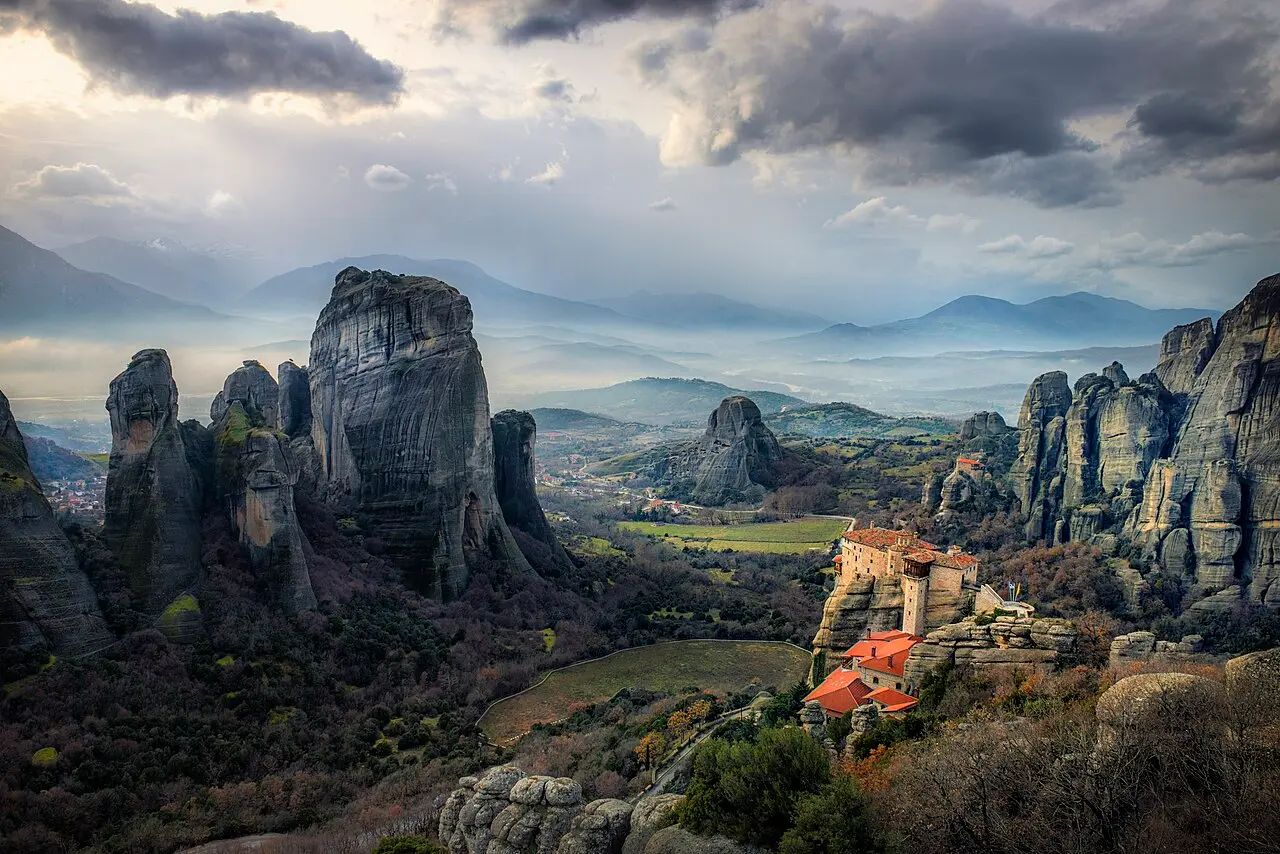
 Rousanou monastery in the foreground, Agios Nikolaos behind it and part of the Grand Meteora can be seen in the upper right hand corner of the picture. The village of Kastraki is behind the rocks on the left. Photo: Stathis floros, Wikimedia Commons
Spiritual Landscapes, Monasteries, Seasons, and a Perfect 2 Day Itinerary
When you first see Meteora, the sheer scale catches you off guard. Massive rock formations rise 400 meters from the earth as if the ground itself rebelled against gravity and won. Perched on their summits are monasteries that have stood for over 600 years—some accessible only by rope ladders and nets, built by monks seeking solitude in the clouds. This UNESCO World Heritage Site in central Greece is one of the most visually stunning and spiritually meaningful destinations in all of Europe. It's a place where geology, history, and human determination converge to create something unforgettable.
What is Meteora and why is it famous?
Meteora is a UNESCO World Heritage Site in central Greece, famous for its massive sandstone rock formations and historic Eastern Orthodox monasteries built on their summits.
Meteora means "suspended in the air," a name that perfectly describes the monasteries that appear to float above the Thessalian plain. It is one of the most important spiritual centers in Greece and a top destination for nature lovers, photographers, and cultural travelers.
Where is Meteora located?
Meteora is located near the town of Kalambaka, at the western edge of the Thessaly region. The nearby village of Kastraki sits directly beneath the rock formations and offers some of the best views.
How do you get to Meteora from Athens?
By train and bus
Travel time is approximately 5 to 6 hours. The train from Athens to Kalambaka is the most popular option, with tickets ranging from €18 to €29. Buses also run from KTEL Liosion in Athens to Trikala, then onward to Kalambaka.
By car
Driving takes around 3.5 hours, covering about 335 km. Expect fuel and toll costs between €71 and €102. Driving offers flexibility for viewpoints and sunset stops.
Day trip vs overnight stay
Day trips from Athens are possible but rushed. Staying at least one night in Kalambaka or Kastraki allows a relaxed pace and access to sunrise and sunset views.
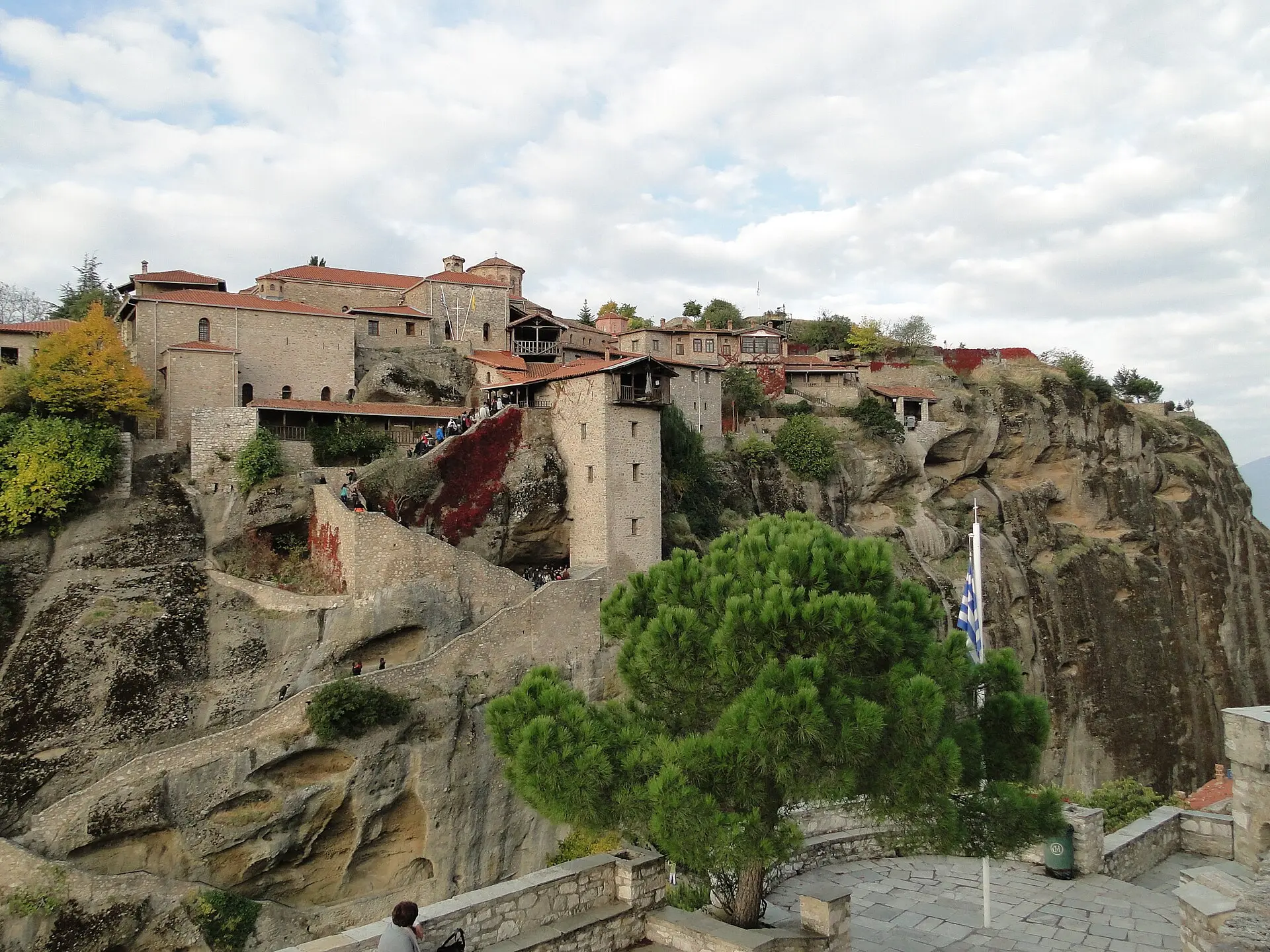 Great Meteoron Monastery, Meteora, Greece. Photo: Bernard Gagnon, Wikimedia Commons
How can I visit Meteora from Thessaloniki?
Many travelers combine Meteora with northern Greece.
Organized tours and transfers from Thessaloniki typically take around 3 hours each way. These tours are ideal if you do not want to drive and want guided monastery visits and viewpoints included.
⛪ How many monasteries are there in Meteora?
There are six active monasteries open to visitors today:
- Great Meteoron - The largest and most impressive
- Varlaam Monastery - Known for its frescoes and museum
- Rousanou Monastery - Accessible and photogenic
- St. Nicholas Anapafsas - Smaller, with beautiful frescoes
- St. Stephen Monastery - Easiest access, no stairs
- Holy Trinity Monastery - Most dramatic setting, featured in James Bond film
Entrance fee: €5 per monastery. Children under 12 enter for free.
👗 What should I wear when visiting the monasteries?
Dress modestly:
- Men must wear long pants
- Women must wear skirts covering the knees and shoulders
- Wrap skirts are usually provided at entrances
- Comfortable shoes are essential due to stairs and stone paths
🌤️ What is the best time of year to visit Meteora?
Meteora is a year-round destination, but each season offers a different experience.
Spring (April to June)
- Temperature: 15 to 23°C
- The landscape is green, wildflowers bloom, and hiking trails are at their best
Summer (July to August)
- Temperature: Around 30°C
- All monasteries are open, but crowds are heavier
- Early morning visits are strongly recommended
Autumn (September to October)
- Temperature: 14 to 22°C
- Fewer tourists, autumn colors, and perfect conditions for photography
Winter (December to February)
- Temperature: 0 to 8°C
- Snow transforms Meteora into a dramatic winter landscape
- Fewer visitors, shorter monastery hours, and possible road closures
📅 What is the ideal 2-day itinerary for Meteora?
Day 1: Monasteries and viewpoints
| Time | Activity |
|---|---|
| Morning | Visit Holy Trinity Monastery |
| Mid-morning | Continue to Varlaam and Great Meteoron |
| Lunch | Traditional meal in Kalambaka |
| Afternoon | Photography at panoramic viewpoints |
| Sunset | Sunset viewing above Kastraki |
Day 2: Nature and slow exploration
| Time | Activity |
|---|---|
| Early morning | Hike Meteora trails through forested paths |
| Mid-morning | Visit Rousanou or St. Stephen Monastery |
| Lunch | Lunch in Kastraki with rock views |
| Afternoon | Optional: Guided tour, caves, or local museum |
| Late afternoon | Departure |
This itinerary balances spiritual sites, nature, and rest.
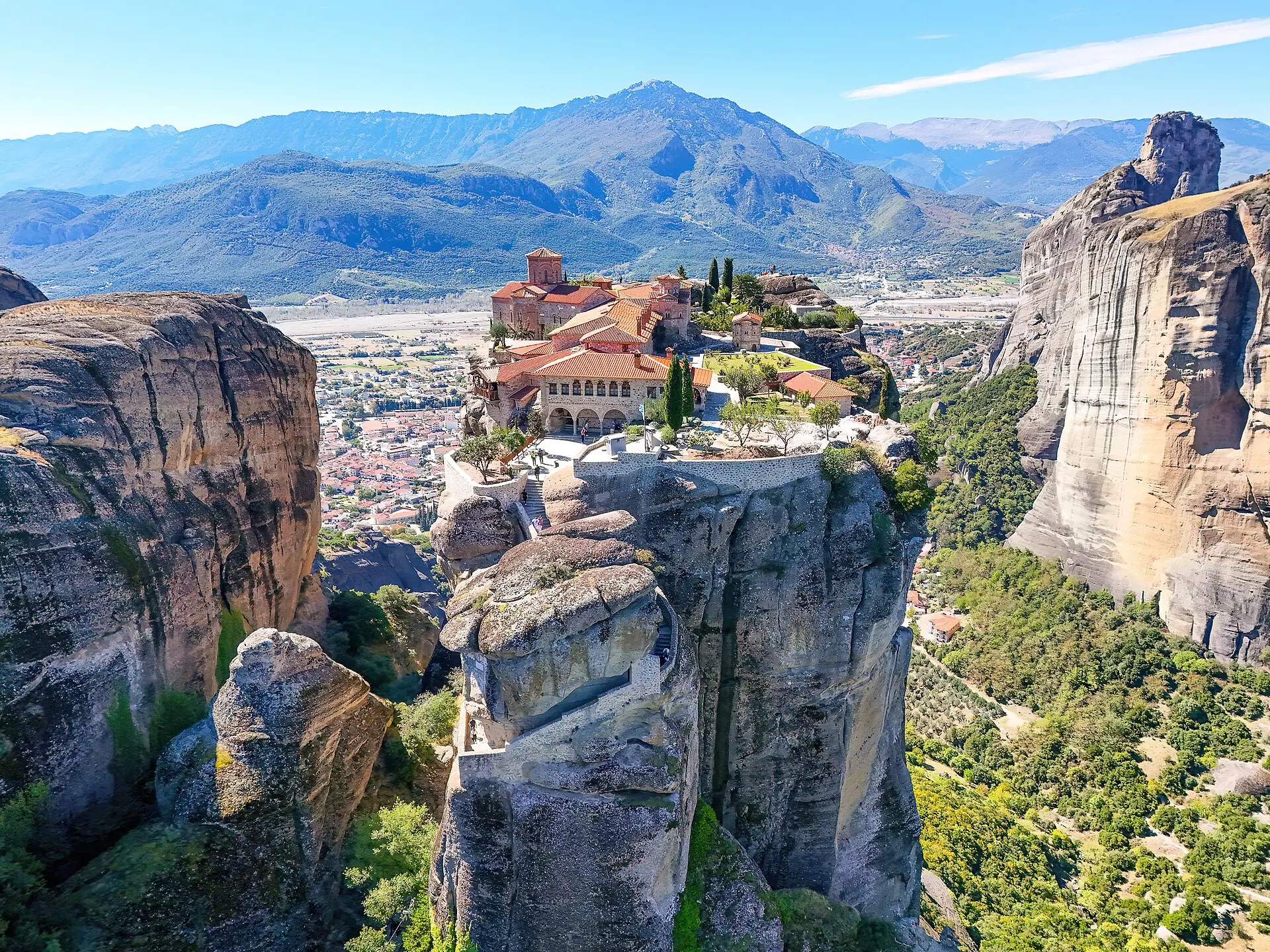 Monastery of the Holy Trinity in Meteora. Photo: Giles Laurent, Wikimedia Commons
🏨 Where should I stay in Meteora?
Kalambaka
- Best for: Convenience, restaurants, and transport connections
- Price range: €70 to €100 per night (mid-range hotels)
Kastraki
- Best for: Quieter stays with dramatic views
- Price range: €40 to €70 per night
🥾 Is hiking in Meteora worth it?
Absolutely. Meteora has some of the most scenic hiking trails in Greece, connecting monasteries, caves, and viewpoints. Trails range from easy walks to moderate climbs and are best enjoyed in spring and autumn.
Popular trails:
- Ancient monk paths between monasteries
- Forest trails with panoramic views
- Cave exploration routes
🎯 Do I need a guided tour in Meteora?
Guided tours are recommended if you:
- Do not drive or want transportation included
- Want deeper historical and spiritual context
- Wish to discover hidden caves and lesser-known viewpoints
Tours often include storytelling that enriches the experience beyond what you can find in guidebooks.
💡 Practical tips for visiting Meteora
- Pack layers - Weather changes quickly
- Wear sturdy shoes - Many steps and stone paths
- Visit popular monasteries early - Avoid crowds
- Check opening days in advance - Each monastery closes one day per week
- Stay overnight - Experience sunrise and sunset
- Bring water and snacks - Limited options near monasteries
- Respect monastery rules - Photography restrictions may apply inside
🌟 Is Meteora worth visiting?
Yes, Meteora is one of Greece's most unforgettable destinations. It combines natural wonder, deep spirituality, outdoor adventure, and timeless beauty in a way few places on earth can match.
Whether you're a photographer, hiker, history enthusiast, or spiritual seeker, Meteora offers an experience that will stay with you forever.
🗺️ Explore More of Greece
After experiencing Meteora's spiritual heights, discover more of Greece with googlementor.com. Find:
- Authentic tavernas in nearby Thessaly villages
- Hiking trails across mainland Greece
- Hidden monasteries and Byzantine sites
- Local experiences beyond the tourist trail
Ready to Plan Your Meteora Adventure?
➡️ Visit googlementor.com for curated local recommendations that complement your Meteora journey!